Tuesday, May 1, 2018

Reading Notes: Lang's European Fairy Tales, Part B

Wow, so Peter Bull was just really sad, if you care about animals. I can't believe that clerk got away with killing that couple's cow that they loved so much. Like, yeah, it was weird that they thought of the cow like a son and tried to have it taught how to speak, but still. They were just peasants, and they didn't know any better, and the clerk didn't face any consequences. At least the merchant went along with it, even if only for the money, so their hearts weren't broken. That story just sucked. I don't even want to rewrite it because thinking about it makes me sad.

I liked the Master and Pupil, but I don't know that I have any interest in rewriting it. I don't think there's anything I'm just burning to change, so I guess I'll leave it alone.

The Cottager and His Cat was also a cute little story. It could be interesting to rewrite it where the young man doesn't take heed of his dream, but I think I like this story too much to make it sad.


I thought Andras Baive was pretty cool, and it could be a really interesting story to tell from the perspective of the bailiff or a townsperson, maybe a little kid. Since Andras Baive was a legend, a kid in town presumably would have been really excited to watch him get into a contest with the bailiff. I haven't really written from a child's perspective before, so it would definitely be a challenge. I would start with the kid rambling about how amazing Andras Baive is and then have him be present for the bailiff's challenge and give him a first row seat to the action, with maybe a little hint that the bailiff isn't all that he seems.

Image: Cat.

Bibliography: Lang's European Fairy Tales, by Andrew Lang. Source.

Reading Notes: Lang's European Fairy Tales II, Part A

This week I read some of Lang's European Fairy Tales. In this first half there were actually only a few stories, most of them broken into two parts. That's nice because then there's more room for detail, but it's also harder to figure out what part of the story to rewrite, since most two-parters are too long to rewrite the whole thing.

I didn't like the first two stories very much. Half-chick was mostly annoying, though it was kind of funny to think about him hopping everywhere on one leg. His comeuppance just seemed way too harsh. He was rude, not a murderer or anything. If I rewrote his story, I think I'd probably try to either make him less of an asshole or change his punishment so that it wasn't permanent, even though the point of the original story is that it explains why there's a rooster on weathervanes. I just think he should have more of a chance to grow as a character, I guess.

Clever Maria didn't make any sense to me. It was like whoever came up with it kept forgetting what they had said before? So Maria's dad gives her and her sisters plants but after her sister's plants die that's just never mentioned again? It's so freaking weird. I didn't at all understand why she ended up with the king. If I were rewriting this I don't think I would even know where to begin, so I'm striking it off the list.

I think my best possibility for rewriting would be the Seven-Headed Serpent. It would be kind of fun to try writing a fight scene, since the main story entirely skips it. Not that it's an actual fight, just the hero chopping the serpent's heads off one by one, but it could be cool to narrate.


Bibliography: The Yellow Fairy Book by Andrew Lang, illustrated by H. J. Ford (1894).

Monday, April 30, 2018

Tech Tip: Bookmarking


I use bookmarks a lot, for everything from quick links to my email inboxes to important links for classes like this one. I also use bookmark folders to keep track of links to sources for papers, especially when I'm first looking for sources and am just skimming. During those times, I'll add anything that looks promising to the folder, and then I can go through later and narrow the sources down to the ones I'll actually use.

Image: Bookmarking. Source.

Thursday, April 26, 2018

Week 14 Story: The Girl Who Became a River


5/1/18
Dear Diary,
It was another boring day, like every day in this stupid town. I went to work, put up the new display for May, which is just the April clothes with the mannequins in opposite windows, helped the same boring customers, ate a grilled cheese for lunch, went to class, and went home. In class, Marianna said my sweater was “interesting” and that kind of hurt. I know she’s my friend, but sometimes she just seems like she hangs out with me because it makes her feel better about herself. Anyway, I made nachos for dinner, and watched Netflix for three hours. There’s just nothing to do here, and no one to do the nothing with, and it freaking sucks. Maybe something new will happen tomorrow. Or not. Probably not.


5/5/18
Dear Diary,
I went for a walk today, through the forest on the edge of town. Marianna told me not to go, but I just felt called, you know? Like there was something in the forest I needed to see. So I went down this little path, until I got to a river, and then I just sat by it for a bit. I listened to the flow of the water and after a while I thought I heard it whispering to me. I don’t know how I understood, but I think it told me it wasn’t always a river? That it was a person? I know that’s really weird, but it also didn’t feel strange at all. Talking to the river felt perfectly natural and I don’t know why. I’m going to go back tomorrow, and talk to it again if I can.


5/7/18
Dear Diary,
The River and I have been talking a lot. Her name is Laurel, and she used to live in town, but she hated it, like I do. One day she walked into the forest and just…never left. She sat up against a rock and let her thoughts flow, like water, until suddenly she was water. She says I can do it too, if I want. That’s why she can talk to me, because I could do it.  I could be a river, or a tree probably. I just have to go back out to the forest and let myself really join with the world around me. I want to. My job sucks and Marianna is my friend but she isn’t very nice and hanging out with Laurel in the forest all day sounds so much better. I think I’ll try tomorrow. If it doesn’t work, I’ll just come back.


5/8/18
In a forest outside a small town, a girl sits next to a river, legs crossed. She has been sitting for several hours, but they have passed like minutes, and the edges of her form are starting to blur. Slowly, she begins to dissolve.

5/9/19
In a forest outside a small town, where one river flowed, two now cross, waters mingling as one for an instant before returning to their separate channels.


Author's note: The original story I worked from is about three orphans, two sisters and a brother, who always had to work really hard and were never lucky. Their lives were very difficult, so they decided to wander and become great rivers, because that's just a thing that was possible then. They go to sleep in a swamp, and the sisters sneak off to take the best places to flow, and when he wakes, the brother angrily chases them in river form until he runs into the sea. Essentially, the story explains how three Russian rivers came to be.

I only took the part of the story that says people are able to turn into rivers, and wrote a story about a girl that lives in an ambiguous small town, hates her life, and learns that she can turn into a river from one that used to be just like her.

Image; River. Source.

Bibliography: The Metamorphosis of the Dnieper, the Volga, and the Dvina from Russian Fairy Tales by W. R. S. Ralston (1887). Source.

Wednesday, April 25, 2018

Reading Notes: Russian Folktales, Part B

Well, I was rather horrified by the story where the loyal dog gets killed after he defends the master that abandoned him. Were I the dog, I'd hold a grudge too. I don't see why he should have been killed instead of just given to someone else, but as I said in my last post, Russia's a harsh place, I guess.


There's such a strange mix of stories with happy endings where a risen corpse or demon is defeated and stories where a bad thing happens and that's all. Or at the least, there doesn't seem to be any sort of happy or satisfying conclusion, at least not to me. I have lots of possibilities if I decide to use one of my favorite rewriting strategies and change an ending to suit morals that I like better, but I feel like I've gone that route so often during the semester that I don't know that I have any interest in doing that sort of rewrite again in the class.

My other go-to is to change the perspective a story is written in. Almost all, if not all, of the readings for this class are in third-person, which makes it relatively simple to just tell the same story in a different voice. This is a viable option for any of the Russian folktales, which are all in third-person. The method can make for an interesting character study, particularly if put in a format other than the character seeming to narrate directly to the reader. I haven't done a diary entry kind of rewrite yet, though it's a bit similar to the letter I wrote for Amten. As mentioned in Part A of my reading notes, the river story would be a great candidate for this format, and is currently what I'm leaning towards. I also will be trying to keep it on the short side, since I have a lot of other assignments this week.

Image: Russian Moujik (peasant). Source.

Bibliography: Russian Fairy Tales by W. R. S. Ralston (1887).

Tuesday, April 24, 2018

Reading Notes: Russian Folk Tales, Part A

This week I decided to read Russian folk tales, and boy were they strange. I was both surprised and not surprised about the sadness of many of the endings. Russia is a harsh place. A couple of the stories just didn't seem to make sense at all. They felt a little like anti-jokes.


I did find the stories about Wednesday and Friday kind of fun. Either one could be interesting to try and update to a modern setting, or tell from the perspective of the day/demon/goddess? I'm also interested in doing something related to the story where the siblings turn into rivers. With that situation, I think I'd like to write some sort of first person perspective for a character that knows they have the ability to just turn into a river forever if they feel like it, and does. I could get into how they knew, and how they came to the decision to do it, and how they feel about it afterward. That could play out as a series of diary entries + 3rd person for post-river thoughts, or something closer to a stream-of-consciousness with first-person all the way through. I'm actually pretty into this idea.

I could also try my hand at something creepy, and try to write a more suspenseful and dramatic version of the story where the dead mother is found suckling her living child. I don't go in for scary stuff very much, so it would definitely be a new experience for me as a writer.

The story about the bad wife was also amusing and intrigued me, but I don't know that there's anything I particularly want to do with it. I think right now my number one choice is actually the river story, though I found it kind of boring initially.

Image: Anti-joke Chicken. Source.

Bibliography: Russian Fairy Tales by W. R. S. Ralston (1887).

Monday, April 23, 2018

Growth Mindset Acronym

Try Often, Don't Abandon Yet

This is an acronym of TODAY to remind me to do things now instead of putting them off, to always keep trying, and to never give up or stop adding "yet" when I feel like I can't do something.

Meme Generator Tech Tip


Meme created using ImgFlip.com

Thursday, April 19, 2018

Reading Notes: Beowulf, Part B


One of the main things I've noticed about this telling of the story is how full of detail it is - the setting is given so much attention without being boring, and that's something I want to imitate in my own writing. 

I'm also growing more attached to the idea of rewriting a chunk of the story with elementary school kids. For example, the scene with Beowulf and his men setting up their beds in Heorot could be kindergarteners about to take a nap. It could be really fun to do it from a limited third-person perspective, where a kid is just really tired, but he thinks he's being put under a spell. I have to figure out who Grendel would be in that situation. A teacher? A bully? Who lurks during naptime? 

If I just do the "Grendel attacks" portion, that's all I have to figure out logistically. I'm leaning away from anything later than that, just because I don't want to mess with finding something to be the kindergarten equivalrent of losing your arm in a fight. At the same time, if I can come up with something, the playground would be an easier place for a fight scene...

I'm still kind of tempted to do something with Unferth, though. He has an actual character arc and his story would work well with diary entries, one from each time he appears in the narrative. That's similar to stuff I've done before, but it could still go in my portfolio, probably better than anything else I've done recently. The elementary concept isn't something I would necessarily put in my portfolio, but you never know. I'm trying to have a diverse set of storytelling subjects and styles to make sure I'm really taking advantage of the portfolio format. Elementary has a lead in that respect over Unferth diary, because I've already done first person and I feel like I have more ways to creatively distinguish with third. I definitely have a lot of thinking to do.

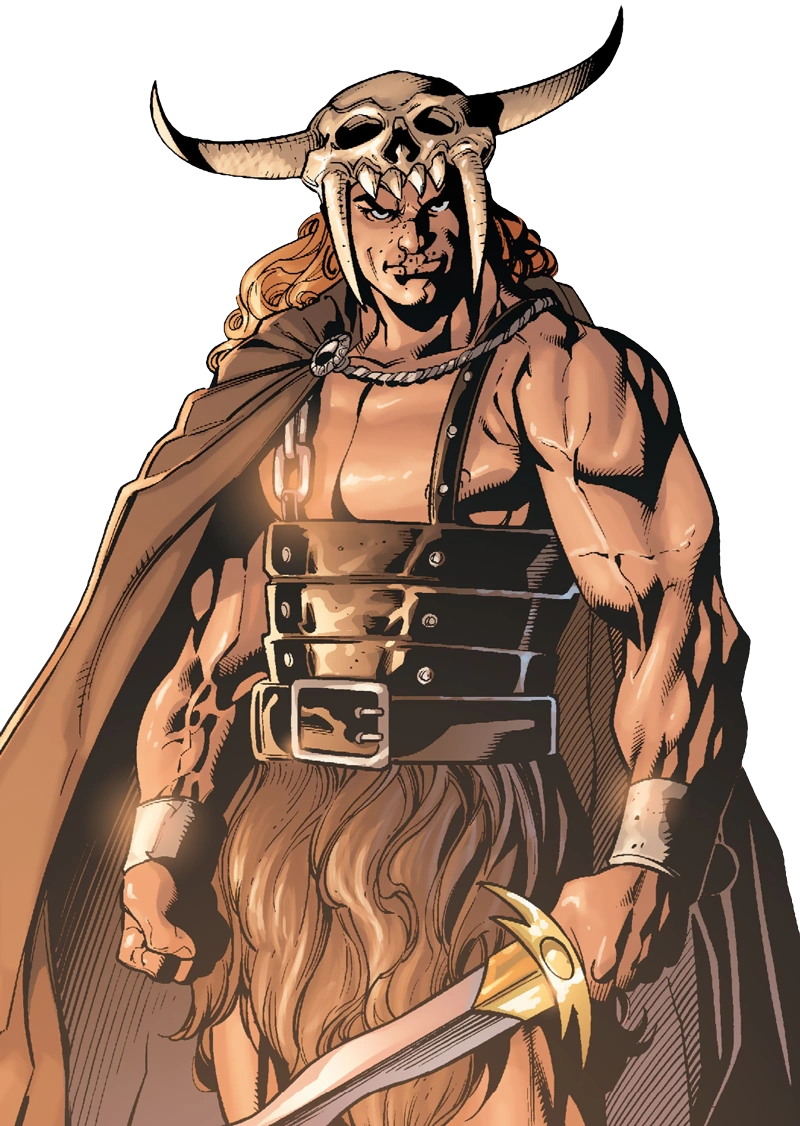
Image: Grendel. Source.

Bibliography:  The Story of Beowulf by Strafford Riggs with illustrations by Henry Pitz (1933). Source.

Wednesday, April 18, 2018

Reading Notes: Beowulf, Part A


This week I've decided to read the legend of Beowulf! Last week when I was commenting I saw someone's story based on it, and it made me want to go read the original. Granted, this is a retelling, but I'm still very excited to see what it contains!

Not to tie in with Skyrim again (my first attempt blending that game with a story didn't go very well, to say the least), but I did immediately notice that the game actually references and draws inspiration from this legend. There are several common names and themes, like Hrothgar, and it's actually pretty cool to see how art/literature influences other art/literature.

Unferth is only barely mentioned so far as the king's friend and a coward. I'm thinking that could be fun to explore and turn into a stream-of-consciousness or diary-style story about how/why he doesn't want to face Grendel. It depends on what's said later, though, as it looks like he'll show up more later.

It could also be fun to take part of this tale and transplant it to a setting where the stakes are made to feel the same for the character but in context it's ridiculous, like an elementary school footrace or something.

Okay, so I was thinking about making Unferth a relatable character but clearly he's a jerk and I don't particularly feel like giving him sympathy anymore. I could still write from his perspective - I haven't tried writing an asshole without redeeming him in some way - but I just don't know that it would work. I can always give it a shot, I suppose, and just go for unsettling. If it fails, I have the elementary school idea to fall back on. Alternately, I could do Beowulf's arrival in Daneland from the Beach Guardian or Hrothgar's perspective and get a different take on things. I suppose what I do depends at least a bit on what Part B holds!

Image: Beowulf. Source.

Bibliography: The Story of Beowulf by Strafford Riggs with illustrations by Henry Pitz (1933). Source.

Friday, April 13, 2018

The True Fate of Johnny-cake

Brandon was walking through an alley on his way home from work when he spotted something strange: a pancake, balanced perfectly on its edge, a lit cigarette poking out the front. Excited to have some new material for his social media, he pulled out his phone to snap a picture. As he typed the caption, he read the words aloud to himself, "Looks like this Johnny-cake is an es-crepe artist!"


"Johnny-cake? I haven't heard that name in years."

Brandon dropped the phone.

"What the hell?"

"Relax, man, I'm not going to hurt you. That's just my name. Johnny-cake. Not that anyone knows who I am anymore."

"Seriously, what the f--

"--Can't you just roll with this for like, two seconds, man? I can't remember the last time someone noticed me and I get that you humans don't really go in for magic anymore, but I just want to have a nice, friendly conversation for once.

Brandon considers this for approximately .7 seconds. "You're a cake...that talks. I can't just let this go dude. Was I drugged? I have to be drugged. Go away, hallucination!"

"I promise it's okay, bro. You aren't drugged, I'm just magic! Which really never sells anyone on the "not drugged" angle but I'm not really sure how else to communicate that I exist and you aren't crazy, so here we are! Now tell me, how was your day?" Johnny-cake takes a drag of the cigarette and rolls a little toward Brandon.

"Nah man, this is too weird. I bet Paul slipped LSD into my food or something. Wait, wouldn't I have noticed that? I don't know. I just gotta get outta here!

With that, Brandon takes off down the alleyway, leaving his phone on the ground. Johnny-cake sighs, rolling over to it.

"Man, if only I had arms."

Author's Note: So the original story here is essentially The Gingerbread Man but with a Johnny-cake (a pancake). The pancake escapes a house and is chased by a boy, some well-diggers, and so on and so forth, all the while yelling about how he's faster than everyone. All of his pursuers tire and are forced to stop until he comes to a fox, who tricks him into being eaten.

I'm in a weird mood, so I was imagining what would happen if Johnny-cake survived, was immortal (he already talks and rolls really fast, so why not?), and was hanging out in the 21st century trying not to be eaten or experimented on while he tried to find some company. I also wanted to flip the narrative, where someone ran from the pancake instead of the other way around. It came out like a strange exercise in dialogue, and probably not my strongest work, but fun to write nevertheless. Also, I know the pic doesn't perfectly match my description but Johnny-cake is only a single pancake anyway and that picture was too good to pass up. Pancakes smoking cigarettes are not easy to come by.

Image: Pancake w Cigarrete 1. Source.

Bibliography: English Fairy Tales by Joseph Jacobs with illustrations by John D. Batten (1890). Source.

Wednesday, April 11, 2018

Reading Notes: English Tales, Part B

This week I'm reading English stories, and to try and figure out which one I'd like to write about (I've been having trouble with deciding these things lately), I'm going to add a little to my notes after reading each, just whatever strikes me about the story. I read part A but 100% forgot to finish my reading notes, so we're going to start this method with Part B.


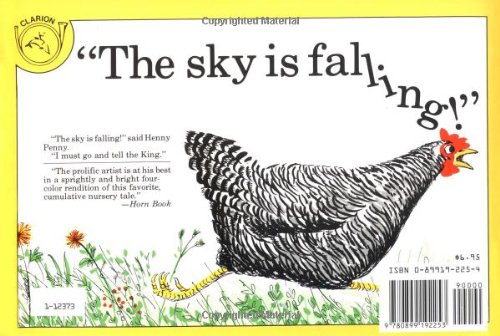
Henny-Penny - I'm pretty sure I remember reading a version of this story as a child. It didn't involve snapping necks though. The dark turn the story takes is interesting but I really can't get past the rhyme-y names.

Molly Whuppie - What's with the English and stories about dead children and animals? I really enjoyed this story asides from the kids dying, but that's something I could fix in a rewrite.

Mr Fox - These really are just terribly dark stories. At least the evildoer is killed, but I'm not diggin' the serial killer vibe.

Johnny-Cake - Somehow a rolling cake trying to escape is so much funnier to me than a gingerbread man. I kind of want to rewrite this story where the cake gets away? Or where the cake never talks, it just rolls away and no one can figure out why or how or how to catch it.

Mr Miacca - I'm really concerned about the English people. Mr. Miacca sounds like someone I wouldn't want a reward from even if he offered it. I could write about his good side, though, and juxtapose it with the bad. That would be fun to write probably, but maybe a little long.

The Laidly Worm of Spindleston Heugh - This was a cool story, but I don't think I want to mess with the exposition.

The Ass, The Table and the Stick - I was so into the story until Jack beat and robbed the other neighborhood girls and I instantly hated him.

Fairy Ointment - For whatever reason fairy stories kind of bore me, so I guess it's looking like Jonny-Cake or Mr. Miacca.


Image: Henny Penny. Source.

Bibliography:  English Fairy Tales by Joseph Jacobs with illustrations by John D. Batten (1890) Source.

Friday, April 6, 2018

Week 11 Story: The Woodpeckers


Tell me, do you hear the tapping in the trees? That is the sound of the woodpeckers, pecking away as they always do. They are mournful creatures, trapped for many ages by the mistake they made so  long ago. Let me tell you the story.

When the world was much younger, woodpeckers did not yet exist. There were men, however, like you and I, living in tribes as they should. These tribes also had medicine men. The medicine men could eat the strange orange moss that grew on some trees, but the rest of the tribe was forbidden. The moss could be helpful, but it could also ensnare the user in addiction. One day, the medicine man of a tribe fell sick. He could not get out of bed or even speak. Everyone prepared for the worst. One boy decided that he would try to save the medicine man by sneaking out to the woods and taking some of the moss. After he put it in his mouth, he fell to the ground and began to have visions. When he came to, the boy ran back to the village, crying, "I saw the medicine man! I saw him! I can fix him!" He ran into the tent where the man lay and placed some of the orange moss into his mouth. He said the moss had given him a vision, and that it would heal the medicine man in three days.

The rest of the tribe knew that the moss was dangerous. Still, seeing that the boy had taken the moss and learned much, they decided that they also wanted to try it. They all had many colorful visions of many events that would and would not come to pass. When they woke, they wanted more. The whole village became addicted to the strange orange moss, except the medicine man. He woke after three days, and, seeing the people in such a state, decided he must do something. So, he cast a spell to separate their souls from their bodies, and hid them in the trees. Then, one by one, he enacted a curse upon the tribe. Their skin turned black and feathery, their hair bright red. Arms turned to wings. Mouths turned to beaks. As they became aware of their predicament, the medicine man explained, "I have put your souls inside the trees of the forest. You must search each one until you find your own, and only then will you become a human again.

To this day, many woodpeckers still search the trees, looking for their souls, and in some parts, strange men come from the forest, as if they had awoken from a dream. Stay away from the orange moss, my friends. It will bring nothing but trouble.


Author's Note: In the original story, there is no sick medicine man. instead, some boys playing in the woods just decide to try mescal, a hallucinogen used by medicine men. In a nod to a Phineas and Ferb episode (The Ballad of Badbeard), I changed the drug to orange moss. I added the sick medicine man to make the boy that starts the moss-taking more sympathetic. Also, in the original story a god hides the tribe's children in the trees, rather than a medicine man hiding their souls. I didn't like the thought of children who did nothing wrong being stuck in trees, so I changed it. And now, if a woodpecker finds its soul, it can turn back into a person, so there's more chance of a happy ending.


Image: Woodpecker. Source.

Bibliography: "Why the Woodpecker Pecks" from When the Storm God Rides: Tejas and Other Indian Legends retold by Florence Stratton and illustrated by Berniece Burrough (1936). Source.

Tuesday, April 3, 2018

Reading Notes: Tejas Legends, Part A


I'm really interested in emulating the children-oriented style of the Tejas stories. I tend towards writing longer stories and always try to use complex sentence structure and a rich vocabulary, so I think paring down and writing something more simplistic will be a really good challenge for me.

These stories are very plain-spoken, and it's an aesthetic I really enjoy. I especially want to work on cutting down my sentence length. These stories will often have several sentences with no added clauses in a row, and then one compound sentence or two every now and then. I also want to make sure I choose an explanatory legend. I haven't done any of those yet, but I keep seeing them from other people in the class and they seem like fun. I liked the story of the north and south wind, because it's really funny to think about two old dudes fighting like that, so that could be a fun one.

The story about the woodpeckers would also be a good possibility. It's told simply, but it's also very sad. However, I'd also want to change the ending, because while the sad ending is the one that warns about the dangers of drugs and is explanatory, I'd want to reunite the kids with their families. I don't want to compromise the explanation though. I could have it be a trick, and the kids just went to other tribes and the parents were punished by being told they were hidden in the trees.

I also just had another idea, which is to frame the story by writing from the perspective of an oral storyteller who is telling it around a fire. Then, when it comes time to add another story to my portfolio site, this one will be ready to go. It should add even more variety to my portfolio than the site already has.

Image: Woodpecker. Source.

Bibliography: When the Storm God Rides: Tejas and Other Indian Legends retold by Florence Stratton and illustrated by Berniece Burrough (1936).

Friday, March 30, 2018

Week 10 Story: The Devil and the Seven Dwarves


One day, seven dwarven princes were walking in the forest when they heard a woman singing so beautifully that they immediately began to follow the sound. As they entered a clearing, they saw her: A fair maiden with hair as dark as night and skin as white as snow, singing to a little bird that flitted about her. The princes had fallen in love the moment they heard her voice, and when they saw her, they immediately began to argue about which one of them would marry her. Upon seeing them, the girl ceased her song and hurried over. The dwarves were caught up in their argument, however, and missed the red gleam in her eyes (for, enchanting as she was, the maiden was truly a devil, and the bird her husband). Reaching them, she exclaimed, “Oh, please stop arguing! I am Snow White, and I can marry all of you!”


At this, the princes stopped talking, stared up at her, and began to smile. “That sounds great!” They chorused, and, taking her arms, led her and the bird on her shoulder to their palace, where they lived happily ever after.

Until the oldest brother died.

After a period of mourning, however, they lived happily ever after.

Until the new oldest brother died.

They tried again to live happily ever after, but the brothers continued to die, year after year, until only the youngest remained, and even he was very ill. The princes’ subjects, worried, sought out the huntsman, who moonlit as a fortune teller.  He didn’t actually know anything more than a few garbled phrases of real witchcraft and the better-known divination methods, but it worked to fool the locals, who would accept bad outcomes so long as they were predicted through the proper channels. Still, as far as the subjects knew, he was the genuine article, so off he went to try and cure the last remaining prince.

Upon his arrival at the prince’s bedside, the huntsman performed a traditional prayer ceremony as he had seen other fortune tellers do, but he only felt sick, and nothing else happened. In an attempt to continue the charade, he shooed the others out of the room. When Snow White left the room, his illness left with her, and that frightened him deeply. He decided to sneak out the window, but as he leapt out to the ground, he collided with the little bird that had come with the woman, knocking it to the ground. The huntsman ran, but as he did, he heard Snow White go to cradle the bird in her hands, lamenting, “Oh no! He has discovered us! Tomorrow he shall tell them to burn us at the stake, and that will be the end!”

Though he was no fortune teller, the huntsman was no fool, and so the next day he fetched the men who had brought him and told them the beautiful woman and her bird were the cause of the final dwarf’s illness. The devils were immediately burned, and the dwarven prince, Sneezy, was healed almost immediately, though he still retained some allergies. Sniffling his was to the huntsman, Sneezy asked how he could repay him for ending his torment, to which the huntsman replied, “Oh, just give me some new traps and I’ll be on my way.” And so it was done, and the huntsman and the remaining dwarf remained friends for the rest of their lives.

Author’s note: The original story is that of The Two Devils, which has none of the Snow White/Dwarven details. Instead, seven princes meet this woman and her yak, who are actually a devil and her husband. All seven brothers marry her, but afterwards one brother dies each year until only the youngest is left, because the devil woman is eating their souls. His men fetch a fake fortune teller, who agrees to try and heal the prince on the advice of his greedy wife. When he gets there, he gets sick and scared and when he tries to hide on the roof, he falls through and lands on the yak, prompting the woman to freak out, thinking they’ve been discovered. In doing so she gives away that the way to defeat them is to burn them alive, which the fake fortune teller proceeds to do. The prince recovers, and the fortune teller asks for yak nose rings as payment, which he gets, until his greedy wife demands more, and the prince ends up giving him half of the kingdom.
In my story, I made the devil woman Snow White, the yak a bird, and the princes dwarves. The huntsman became the fortune teller as well. I was initially going to add the evil queen as the wife, but it didn’t seem to fit with the story, so I left her out, which had the added benefit of letting the huntsman accept a humble reward.


Bibliography: The Two Devils from Tibetan Folk Tales by A.L. Shelton with illustrations by Mildred Bryant (1925). Source.

Image: Snow White and her devil bird. Source.

Wednesday, March 28, 2018

Reading Notes: Cherokee Myths, Part B

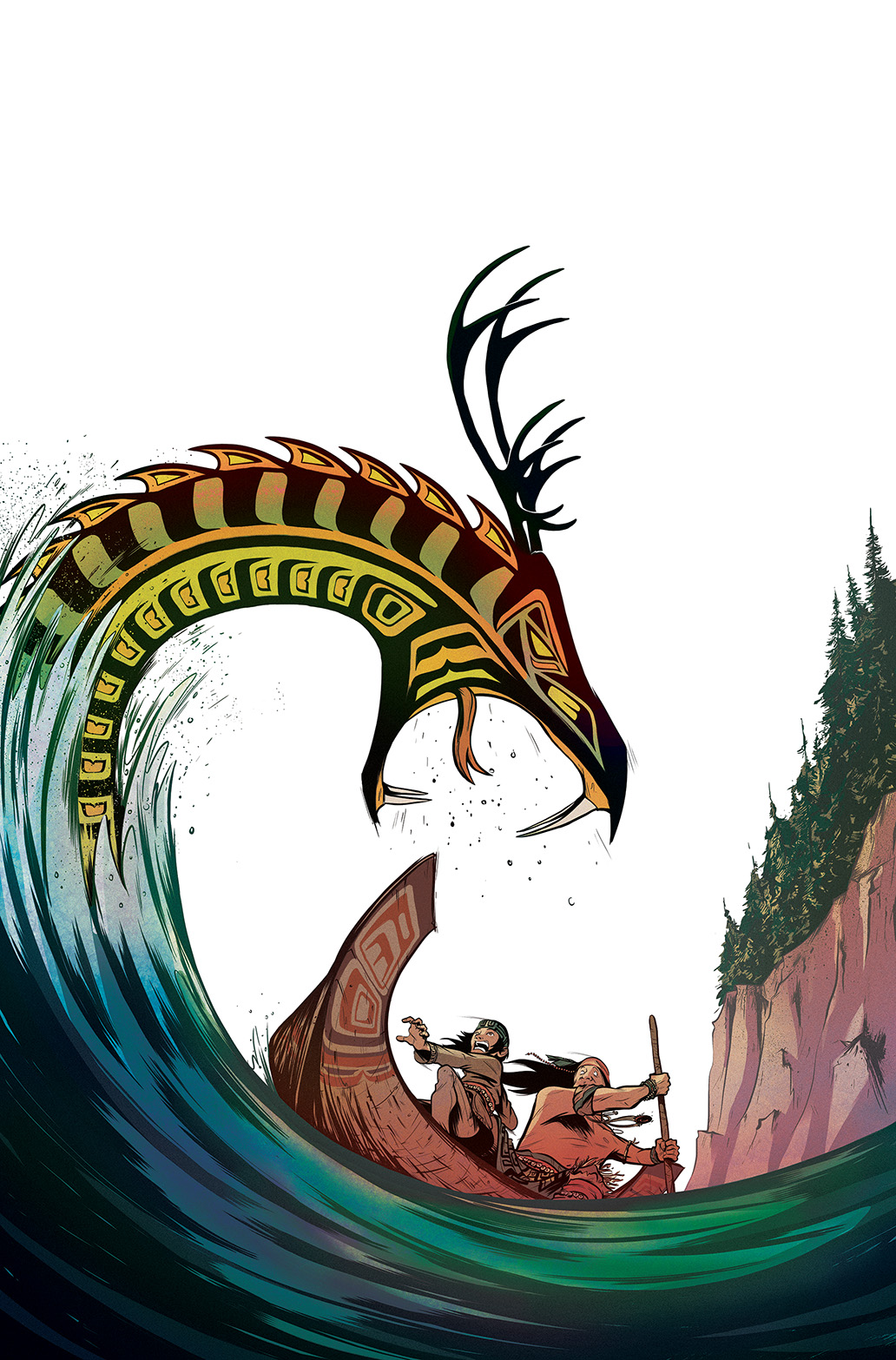
I would really like to write a story from the perspective of the Uktena and the other animals that the medicine man encounters on his way to find the Ulûñsû'tî. The medicine man was arrogant and dismissed them, but I thought they seemed fearsome and would like to give them the attention they deserve. Also, I don't understand how the people were following the medicine man everywhere? Why would they follow him in his search for the giant scary snake that kills your family if you look at it? The logic is not sound, and it's something I would fix in a rewrite. I also didn't quite understand how the Uktena's blood was poisonous, but fine for dyeing clothes in after it formed a lake? However, that's an easily fixable detail. I also wasn't really a fan of the medicine man as a character, and if I were writing a story based off these readings, I would also consider changing him to be more humble and respectful of all of the animals that he encounters.


I was also incredibly surprised that it was only barely mentioned that the rattlesnake is sent to kill THE SUN!?!? If that doesn't have it's own story, it needs to. I'm almost regretting doing a planning post last week because I would love to come up with an incredibly dramatic tale for that. I can't believe that part of one of the Uktena stories only got one line, and I want to know or create more.

Out of curiosity, I google the Uktena, and found out that similar horned serpents appear in a lot of Native American and even European mythology. I feel like there has to be some sort of real creature that existed at some point. Granted, we have mythological creatures like Bigfoot and the Loch Ness Monster today, so maybe it wasn't real. Or maybe the aforementioned do exist...hmm.


Image: Uktena. Source.
Bibliography: Myths of the Cherokee by James Mooney (1900). Source.

Reading Notes: Cherokee Myths, Part A

I decided to read Cherokee Myths this week. I'll be honest, I had to look up what a terrapin was (spoiler: it's just a turtle). I was surprised to see the story of the tortoise and the hare here, though in a different form. I heard the story growing up as part of Aesop's fables, and I think it's really fascinating that a completely different culture has the same setup of a race between a turtle and a hare where the turtle wins. The values illustrated by the stories are different, however, since Aesop's version teaches perseverance, that, "slow and steady wins the race," while the Cherokee version seems to praise the cleverness of the terrapin in tricking the wiley rabbit and the other animals.


Were I writing a story on one of these myths this week, the terrapin and the hare would definitely be in the running. I think it would be fun to try and find a place between Aesop and the Cherokee for the story, perhaps in which both the rabbit and the terrapin cheat.

There were a lot of stories about the rabbit and I don't understand why, in many myths, the rabbit is a boastful and mean character. They seem pretty cute and nice to me in reality, but hey, maybe I'm completely misunderstanding them. Anyway, the Cherokee myths often seem to be explaining the ways of the world more than focused on character development, but I'd be interested in exploring the rabbit's character by having him learn his lesson from one of the stories, and then he could pass the lesson on. For example, after the deer wins the antlers, instead of being jealous and grinding down the deer's teeth in the next story, he could realize he shouldn't have cheated and perhaps go have a conversation with the terrapin on playing fair - even though in the terrapin's original case, cheating worked just fine since he was a "good" animal.

Image: Terrapin. Source.

Bibliography: Myths of the Cherokee by James Mooney (1900). Source.

Wednesday, March 14, 2018

Week 9 Story Planning: The Devils and the Seven Dwarves

Rather than following the plot of the origin story in excruciating detail, I plan to write more from a general summary, with Snow White characters inserted. The basic plotline I intend to follow goes as such:

Seven brother princes find a beautiful girl in the woods with her yak and decide to all marry her, which is a terrible idea because she's actually a demon and the yak is her demon husband. After the marriage, the brothers begin to die one-by-one every year (because she's eating their souls). When there is only one brother left, concerned yet clueless people call a fortune teller to help. The man they call is actually a fraud, but he tries because he doesn't want to give himself up, and he ends up, through a combination of accident and luck, uncovering and defeating the devils. After his success, he is rewarded by the remaining prince, but his greedy wife asks for more for him, and receives it .

Since it's been an incredibly long time since I've actually watched Snow White (and yes, I'm going to use the Disney version here), I refreshed myself on what happened using the synopsis here.


So for character transposition, this is what I'm thinking:

1. Seven Brothers = Seven Dwarves

2. Beautiful Girl/Devil = Snow White

3. Yak/Devil = A forest creature, either a bird or a squirrel

4. Fortune Teller = Huntsman

5. Fortune Teller's Wife = Evil Queen/Hag

I may switch four and five, but as of right now I am relatively certain this is how I'm going to do it.

I've also spent some time looking up details on the tsamba and prayer beads used in the original story, as well as the Tibetan Devil Dance, which is used to expel demons and bring good luck. This research will hopefully give me the necessary info to depict the exorcism of the two devils accurately.


Bibliography: The Two Devils from Tibetan Folk Tales by A.L. Shelton with illustrations by Mildred Bryant (1925). Source.

Image: Snow White and her devil bird. Source.

Reading Notes: Tibetan Folk Tales, Part B

I'm going to write my notes as I go this time - I normally will make small notes as I go, but write the post after I finish. This time, I'm going to add my thoughts on stories as I read them right in the post.

What I'm really noticing with these stories is that, when there's a moral, it doesn't really match what you'd expect to be. Lying, for example, is a apparently a highly rewarding activity if you ask the Tibetans. The fortune teller from Part A lies, he gets half a kingdom. The rabbit in the first story of Part B is lazy and lies, and he never has to kowtow to the lion again.


Okay, story two: killing is bad (when it's for no reason), but polygamy is good. This makes a bit more sense at least. I'm trying to figure out if these stories functioned as entertainment more than teaching tools. That would explain it, maybe.

Third story makes sense, because you shouldn't be too hasty to make decisions or assume you know what's going on if someone tells you otherwise.

Oh, so The Golden Squash takes any confusing morality and tosses it out the window, making it very clear that envy is sinful. I think it's interesting that these stories are occasionally framed with vaguely Christian ideas. I wonder if that's something added by the translator or if Tibet has a history with Christianity at all. I may also just be taking things that have their own holy meaning in Tibetan religion and assuming they hold Christian associations. Either way, looking up some of the religious elements mentioned might make for an interesting Wikitrails post.

As I'm getting through these I am more and more certain that I want to stick with my Snow White idea, so I'm going to push pause on the notes and just read now.


Bibliography: Tibetan Folk Tales by A.L. Shelton with illustrations by Mildred Bryant (1925). Source.
Image: Tibetan Snow Lion. Source.

Tuesday, March 13, 2018

Reading Notes: Tibetan Folk Tales, Part A

This week I decided to read Tibetan Folk Tales, and the tale that has most interested me thus far is The Story of the Two Devils.

I thought this story was so weird, just because the fortune teller was a quack and still ended up with so much. It seems like a weird moral for the liar to come out on top. Not to mention, his wife's greed also paid off. I really can't figure out the message this story is trying to send, besides, "demons are bad and eat people's souls." This definitely could be something to address in a rewrite.

I also found it strange that one woman marrying seven men wasn't more socially unacceptable. Speaking of...Snow White and the Seven Dwarfs, anyone? That could be a really interesting crossover, actually, if Snow White were a demon, the witch the fortune teller, and the prince the yak. It would take some twisting of both stories to make it work, but I think the parallel may be too good to pass up. I'd maybe have to change the plot also, though, because I can't see the dwarves not getting suspicious if they let this woman into their home and suddenly started dying one by one. Granted, she is very charming and could have them ensnared. This would also be a fun opportunity to invert the traditional good princess and evil witch narrative. I'm not sure if I should give the witch a significant other or just merge the wife's greed into the witch. I could ditch that part altogether, though. Maybe she'll ask for a lot right off the bat. Oh, I need a king/prince to split the kingdom...hm. It could somehow be the huntsman? Or, again, I could just leave that part out. Either way, it's something to think about.


Bibliography: Tibetan Folk Tales by A.L. Shelton with illustrations by Mildred Bryant (1925). Source.
Image: Snow White and the Seven Dwarfs. Source.